Coin Identification Guide: How to Identify Coins by Country, Year & Mint Mark
Whether you have inherited a box of old coins or discovered a curious piece at a flea market, accurate identification is the essential first step toward understanding what you hold. This guide walks you through every aspect of coin identification, from reading inscriptions to assigning a grade on the Sheldon scale.
Anatomy of a Coin
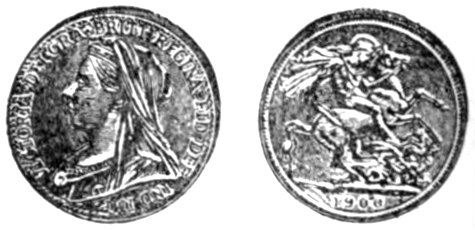
Every coin has two principal faces. The obverse (front) typically carries a portrait, coat of arms or national emblem. The reverse (back) usually displays the denomination, a secondary design, or both. The narrow edge is called the rim, and many coins also bear lettering or reeding on the edge itself.
Key elements to note when examining a coin:
- Legend — the text running around the perimeter, often naming the issuing authority.
- Date — usually on the obverse or reverse; some coins use non-Gregorian calendars.
- Denomination — the face value, which helps narrow down the country and series.
- Mint mark — a small letter or symbol showing which facility struck the coin.
- Designer initials — tiny letters near the portrait or on the truncation of a bust.
Finding & Reading Mint Marks
A mint mark is a small letter or symbol that identifies which facility struck the coin, and it can change a coin's value dramatically. On United States coins, common marks include P (Philadelphia), D (Denver), S (San Francisco), W (West Point), and CC (Carson City, 1870–1893). Their position varies by series: on Lincoln cents they appear below the date; on Morgan dollars they sit above the "DO" in DOLLAR on the reverse.
For British coins, mint marks were used historically to denote branch mints such as H (Heaton, Birmingham) and KN (King's Norton). Modern Royal Mint issues generally carry no mark. German Empire coins used letters A through J for different state mints, a system that persists in modern euro-era German coins.
When examining a coin for its mint mark, use at least 5x magnification and strong, angled lighting. Mint marks on worn coins can be faint, and some counterfeits add or alter mint marks to simulate rare varieties.
Understanding Date Systems
Many coins date by a non-Gregorian calendar, so the number stamped on a coin is often not the Western year it was struck. The most commonly encountered systems, with their conversions, are listed below.
- Islamic (Hijri) calendar — used on coins from many Muslim-majority countries. To approximate the Gregorian year, use: CE ≈ AH − (AH ÷ 33) + 622.
- Thai Buddhist Era — subtract 543 to get the Gregorian year (e.g., 2569 BE = 2026 CE).
- Ethiopian calendar — runs 7–8 years behind the Gregorian calendar.
- Japanese era dates — given as the year within the current emperor's reign (e.g., Reiwa 8 = 2026).
- Hebrew calendar — used on Israeli coins; subtract 3760 for the approximate Gregorian equivalent.
- Vikram Samvat — used on some Indian princely state coins; subtract 57 from VS to get CE.
Coin Grading: The Sheldon Scale
The Sheldon scale assigns a numeric grade from 1 to 70. In practice, collectors use the following abbreviations. Understanding these distinctions is fundamental to pricing because even small grade differences can represent large value jumps.
| Grade | Numeric Range | Description |
|---|---|---|
| AG (About Good) | 3 | Heavily worn; outline visible but most details gone. |
| G (Good) | 4–6 | Major design elements visible; peripheral lettering may be partially worn. |
| VG (Very Good) | 8–10 | Design clear but flat in high points; all lettering readable. |
| F (Fine) | 12–15 | Moderate wear on high points; some detail in hair or feathers visible. |
| VF (Very Fine) | 20–35 | Light wear on high points only; most fine details sharp. |
| EF / XF (Extremely Fine) | 40–45 | Slight wear on highest points; all details sharp, some mint luster remaining. |
| AU (About Uncirculated) | 50–58 | Trace wear on highest points; substantial mint luster. |
| MS (Mint State) | 60–70 | No wear whatsoever. Sub-grades reflect contact marks, luster and eye appeal. |
Identifying World Coins by Script
The writing system on a coin pinpoints its region even when you cannot read the words: Arabic script points to the Middle East and North Africa, Devanagari to India or Nepal, Cyrillic to Russia and the Balkans, and so on. Use the table below to narrow down the issuing region, then cross-reference design motifs and denomination formats.
| Script Style | Likely Region / Countries | Key Visual Clue |
|---|---|---|
| Arabic (right-to-left, cursive) | Middle East, North Africa, Central Asia | Tughra, crescent, or calligraphic cartouche |
| Devanagari (horizontal top bar) | India, Nepal | Ashoka pillar lions or trident imagery |
| Chinese characters | China, Taiwan, Japan, Korea | Square or round center hole on older issues |
| Cyrillic | Russia, USSR, Bulgaria, Serbia | Double-headed eagle or hammer and sickle |
| Thai script (rounded, looping) | Thailand (Siam) | Portrait of the king, Buddhist era date |
| Greek alphabet | Greece, Cyprus, ancient world | Owl, Athena, or cross motifs |
| Hangul (circles and lines) | South Korea, North Korea | Rose of Sharon, Chollima horse motif |
| Georgian (rounded, unique) | Georgia | St. George imagery, lari denomination |
Ancient Coins: Getting Started
Ancient coin identification follows different conventions from modern numismatics. Greek coins are classified by city-state and ruler; Roman coins by emperor, reverse type and mint. Key reference works include Sear's Greek Coins and Their Values and the Roman Imperial Coinage (RIC) series. For Byzantine issues, the Dumbarton Oaks catalog is the standard authority.
When examining an ancient coin, record the metal (gold, silver, bronze or copper), approximate diameter in millimetres, weight in grams, and die axis (the rotational relationship between obverse and reverse). These physical attributes narrow the attribution dramatically before you even read the legends.
Beware of forgeries. Ancient coins have been counterfeited since antiquity itself, and modern cast fakes are widespread. Genuine ancient coins typically show flow lines from striking, not the porous surfaces characteristic of cast reproductions.
Key Date & Semi-Key Coins
A "key date" is a year-and-mint combination with a significantly lower mintage, making it far more valuable than common dates in the same series. Famous examples include:
- 1909-S VDB Lincoln cent — 484,000 minted; worth $800+ even in Good condition.
- 1916-D Mercury dime — 264,000 minted; one of the most sought-after 20th-century US coins.
- 1893-S Morgan dollar — 100,000 minted; the king of Morgan key dates.
- 1932-D Washington quarter — 436,800 minted; scarce in all grades.
Semi-key dates fall between common and key dates in rarity and price. Always check the date and mint mark before spending, selling or discarding any coin.
Error Coins
An error coin is one that left the mint with a flaw in striking or planchet preparation, and because such mistakes are scarce they often sell for many times the value of a normal coin. The most collected error types are described below.
- Off-center strikes — the blank was not properly seated; part of the design is missing. Value increases with the percentage off-center, especially if the date remains visible.
- Doubled dies — the die received a second, misaligned impression, creating doubling in the lettering or design. The 1955 doubled-die Lincoln cent is the most famous example.
- Brockages — a previously struck coin stuck to the die and impressed its mirror image into the next blank.
- Wrong planchet errors — a coin struck on a blank intended for a different denomination or even a different country's coin.
- Die cracks and cuds — raised lines or blobs on the coin's surface caused by a cracked or broken die.
- Clipped planchets — the blank was incompletely punched, resulting in a curved or straight clip along the edge.
Why You Should Never Clean Coins
Common mistakes include using abrasive polishes, acidic dips (including lemon juice and vinegar), or even vigorous rubbing with a cloth. All of these leave micro-scratches or chemically alter the surface in ways that are immediately visible to experienced eyes.
If a coin is genuinely encrusted with dirt, a brief soak in distilled water is the safest approach. For valuable coins, leave conservation to a professional conservator accredited by a major grading service.
Using Krause Catalog Numbers (KM#)
The Standard Catalog of World Coins, commonly called "Krause" after co-founder Chester Krause, is the most widely used reference for modern world coins (1601 to present). Each coin type receives a KM# (Krause-Mishler number) that uniquely identifies it. For example, KM#201b is a US Lincoln cent struck in copper-plated zinc (1982 onward).
Online databases such as Numista and Colnect cross-reference KM numbers, making it straightforward to look up valuations, mintage figures and varieties. When buying or selling world coins, always cite the KM number to avoid ambiguity, as many countries have issued similar-looking coins across different periods.
For coins issued before 1600, the Krause catalog does not apply. Instead, refer to specialised references such as Friedberg for gold coins, or regional catalogs for medieval and ancient issues.
Identify Coins Instantly with StampID
Snap a photo and get an instant identification, grade estimate and current market value for coins from around the world.
Google Play App StoreFrequently Asked Questions
How do I identify a coin?
Start by recording the country or issuing authority from the legend, the denomination, the date, and any mint mark, then match those against a reference such as the Krause Standard Catalog of World Coins or an online database like Numista. If you cannot read the inscription, use the script style and design motifs to narrow the region first. A photo identification app can do all of this from a single picture of the obverse and reverse.
What is a mint mark and where is it located?
A mint mark is a small letter or symbol indicating which facility struck the coin — for example, D for Denver, S for San Francisco, or CC for Carson City on US coins. Its position varies by series: on Lincoln cents it sits below the date, while on Morgan dollars it appears above the "DO" in DOLLAR on the reverse. Use at least 5x magnification and angled lighting, as marks on worn coins can be faint.
How do I know if a coin is rare or valuable?
Rarity is driven mainly by the date-and-mint-mark combination (its mintage) and the coin's grade. Check whether your date is a known "key date" with a low mintage — such as the 1909-S VDB Lincoln cent (484,000 minted) — and assess condition on the Sheldon 1–70 scale, since a single grade point can mean a tenfold price difference. Error coins such as doubled dies and off-center strikes also carry large premiums.
Should I clean an old coin before selling it?
No — never clean a collectible coin. Cleaning almost always reduces value, often by 50% or more, because it removes the natural patina and leaves micro-scratches that graders and experienced buyers spot immediately. If a coin is genuinely encrusted with dirt, the only safe step is a brief soak in distilled water; leave anything valuable to a professional conservator.
Why doesn't the date on my coin match a normal year?
Many coins use a non-Gregorian calendar, so the printed number is not the Western year. Thai coins use the Buddhist Era (subtract 543), Islamic coins use the Hijri calendar, Israeli coins use the Hebrew calendar (subtract roughly 3760), and Japanese coins count years within the current emperor's reign (e.g., Reiwa 8 = 2026). Identify the calendar system from the script first, then convert.