How Much Is My Stamp Worth? Check Stamp Values in 3 Steps
Whether you inherited a stamp collection, found old stamps in an attic, or are curious about stamps you have been collecting for years, this guide walks you through exactly how to determine what your stamps are worth.
Fastest Method
Get an instant value estimate with StampID
Snap a photo of your stamp and get AI-powered identification, condition grading, and market value estimate in seconds.
Free to install. Rated 4.6 on Google Play, 4.4 on App Store.
Stamp Valuation
Most stamps are common. A few are worth a fortune.
Learn to tell the difference with this step-by-step valuation workflow.
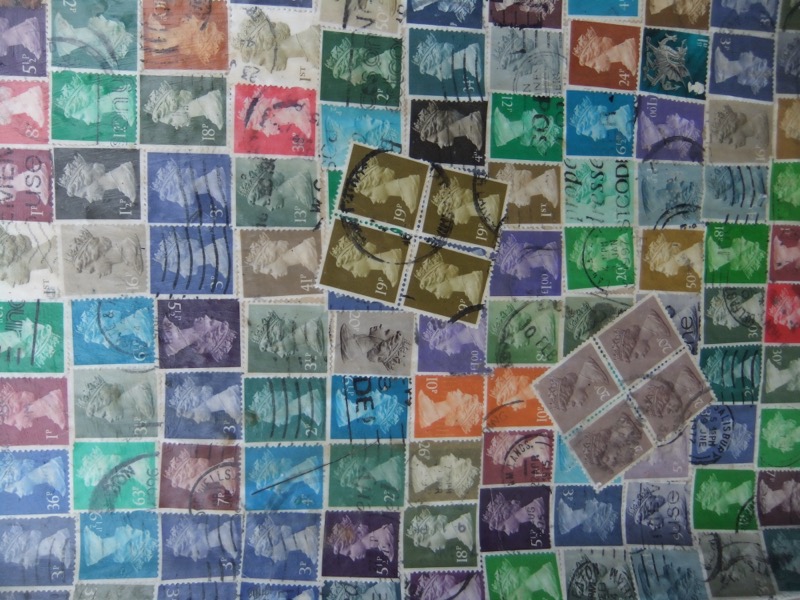
Image: Stamp collection. Photo by Lee Haywood. CC BY-SA 2.0, via Wikimedia Commons.
How Much Are My Stamps Worth? The Quick Answer
Most stamps are worth between $0.05 and $1; roughly 4% land between $1 and $50, and fewer than 1% are worth more. What separates the valuable minority is scarcity, condition, and collector demand — not age. The fastest way to find out where your stamps fall is to identify each one (country, year, catalogue number), then compare against recent sold prices for the same stamp in the same condition; the steps below show exactly how.
Typical stamp values at a glance
| What you have | Typical value per stamp | Read next |
|---|---|---|
| Used modern stamps (after about 1950), everyday issues | $0.01–$0.25 | Selling in bulk |
| Unused modern stamps | Face value or less (often sold as discount postage) | Check sold prices |
| Common stamps from 1900–1950 | $0.05–$2 | US, UK, German guides |
| Common classics from before 1900 | $0.50–$20, depending on condition | How much are old stamps worth? |
| Better classics and key varieties (watermark, perforation, shade) | $20–$500+ | Watermarks, perforations |
| Printing errors and famous rarities | $1,000 to millions | Most valuable stamps |
Ranges are orientation only, for stamps in average condition. Condition, exact variety and demand move any individual stamp up or down.
What Is This Stamp Worth? Check One Stamp From a Photo
If you have a single stamp in front of you and just want to know what it is and roughly what it is worth, start with a photo. Lay the stamp flat in good daylight, photograph the front straight on, and run it through a stamp identifier. You get the country, year, likely catalogue listing and an estimated value range, which tells you whether the stamp deserves the detailed checks below or belongs in the common pile.
For anything the photo check flags as potentially valuable, confirm the details yourself: the exact variety, the condition and recent sold prices.
1) The honest truth about stamp values
About 95% of stamps are worth only $0.05 to $1 each, and fewer than 1% are worth more than $50. Set realistic expectations before diving into valuation methods:
- 95% of stamps are worth $0.05 to $1. Most definitive stamps from major countries (US, UK, France, Germany) were printed in millions or billions.
- 4% are worth $1 to $50. Older commemoratives, better condition examples, and less common varieties fall here.
- Less than 1% are worth over $50. Genuine rarity, pristine condition, errors, and strong collector demand drive high prices.
This does not mean your stamps are worthless. It means you should focus your research energy on the stamps most likely to have real value.
2) How much are old stamps worth?
Old stamps are not automatically valuable. Postal services printed stamps in huge quantities from the start: 68 million Penny Blacks were produced in 1840 and 1841, which is why a used one sells for $100–$300 rather than a fortune. What matters is how many survive in good condition and how many collectors want them.
- Before 1900: the best odds of value. Common used classics are often worth $0.50–$20; scarce issues, unused examples with original gum and specific varieties can be worth hundreds.
- 1900–1950: mostly common definitives worth cents to a few dollars, with valuable exceptions such as high face values, short-lived issues, early airmails and printing errors.
- After 1950: almost always worth face value or less. Errors, missing colours and a few scarce commemoratives are the exceptions.
To date a stamp that has no year printed on it, use our guide to identifying old stamps.
3) Step 1: Identify what you have
Pinning down a stamp's country of origin, year of issue, denomination, and catalogue number determines most of its baseline value, so you cannot value a stamp you have not identified. Start with these basics:
- Country of origin: Look for country name inscriptions. Some stamps use the local language (e.g., "Helvetia" for Switzerland, "Magyarország" for Hungary).
- Year of issue: Check for dates printed on the stamp. If none, use design elements and ruler portraits to narrow the era.
- Denomination: The face value printed on the stamp.
- Catalog number: Match your stamp to a Scott, Stanley Gibbons, Michel, or Yvert catalog listing.
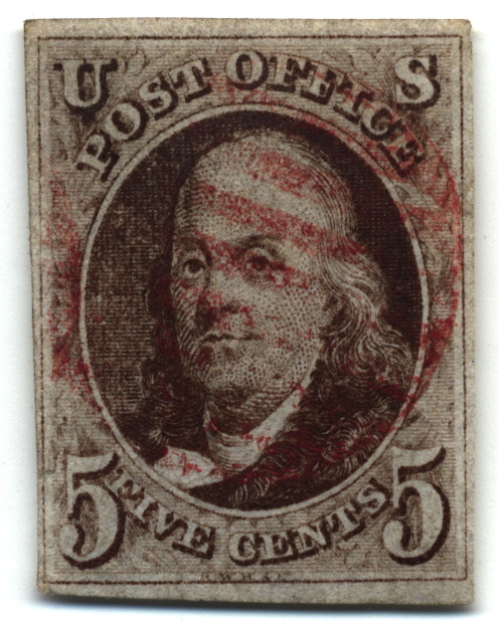
US 5c Benjamin Franklin, 1847 - the first US postage stamp. Value: $500-$25,000+ depending on condition. Public domain, via Wikimedia Commons.
For detailed identification workflows, see our guides:
- How to Identify Stamps by Photo - capture and verification process
- How to Identify Old Stamps - dating classic issues
- Best Stamp Catalogues - which catalogue to use for your country
4) Step 2: Assess condition
Condition is the single biggest value multiplier. The same stamp can be worth $5 in poor condition and $500 in superb condition. Here is what to check:
| Factor | Premium condition | Common / damaged |
|---|---|---|
| Centering | Design well-centered within perforations | Design shifted, touching or cut into perfs |
| Perforations | All teeth intact, evenly separated | Short, pulled, or missing perfs |
| Gum (unused) | Original gum, never hinged (OG/NH) | No gum, heavy hinge remnant, regummed |
| Cancellation (used) | Light, neat cancel that does not obscure design | Heavy cancel, pen cancel, torn by removal |
| Paper | Clean, no thins, tears, creases, or stains | Thinned, torn, foxed, or tropicalized |
For stamps with perforations, measure the perforation gauge. Different gauges can mean different catalog varieties with vastly different values. Also check for watermarks, which are often the key differentiator between common and rare versions of the same design.
5) Step 3: Check market prices
Catalog values are reference points, not selling prices. Here is how to find what stamps actually sell for:
- Recent auction results: Check eBay sold listings (filter by "Sold Items"), major auction houses, and specialized stamp auction archives.
- Condition-adjusted pricing: Match the sold example's condition to yours. A stamp that sold for $200 in VF (Very Fine) condition might be worth only $40 in Good condition.
- Multiple data points: One sale is an anecdote. Three or more recent sales of similar condition establish a price range.
For a list of free and paid price sources and what each is good for, see where to look up stamp prices.
6) Famous stamps and what makes them valuable
Understanding why certain stamps command high prices helps you evaluate your own collection. (For the full list, see our guide to the most valuable stamps in the world.)
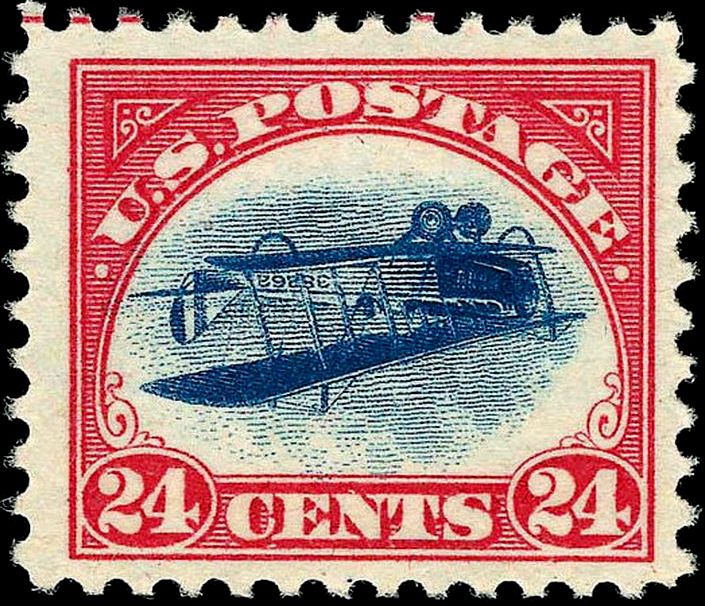
Inverted Jenny, 24c US Airmail 1918. Bureau of Engraving and Printing. Public domain, via Wikimedia Commons.
The Inverted Jenny (US, 1918)
A 24-cent airmail stamp with the airplane printed upside down. Only one sheet of 100 was sold before the error was caught. Individual stamps sell for over $1 million. Value driver: printing error + extreme rarity + iconic status.
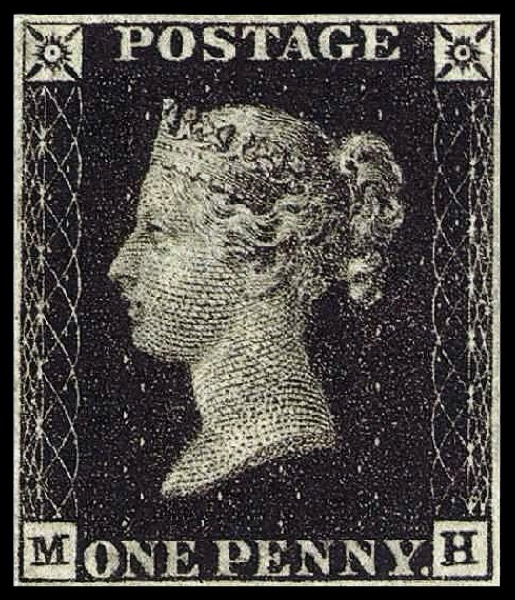
Penny Black, 1840. General Post Office of the UK. Public domain, via Wikimedia Commons.
The Penny Black (UK, 1840)
The world's first adhesive postage stamp. Despite being almost 200 years old, used examples sell for $100-$300 because 68 million were printed. Mint examples with full margins command $5,000+. Value driver: historical significance + condition premium for mint examples.
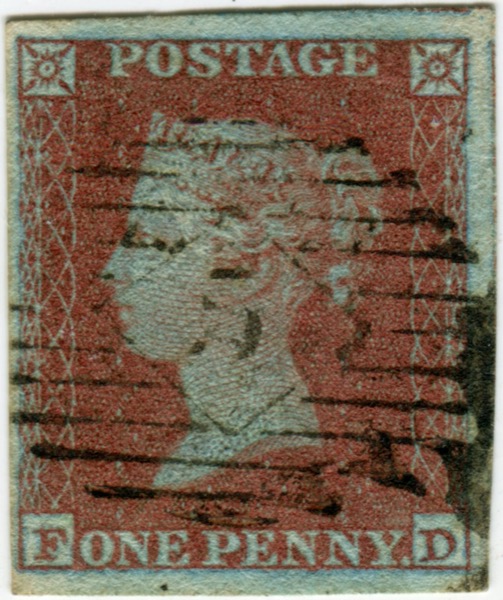
Penny Red, 1841. General Post Office of the UK. Public domain, via Wikimedia Commons.
The Penny Red (UK, 1841-1879)
The Penny Black's successor, produced in far greater quantities. Most Penny Reds are worth $1-$10. However, certain plate numbers (especially Plate 77) are extremely rare and worth thousands. Value driver: specific variety identification within a common issue.
For more examples and the framework behind rarity assessment, see our Rare Stamps Worth Money guide.
7) What to do with an inherited stamp collection
Inherited collections are the most common reason people ask "how much are my stamps worth?" Here is a practical approach:
- Do not throw anything away yet. Even seemingly common albums can contain surprises hidden among ordinary stamps.
- Quick triage first. Use the StampID app to scan through the collection quickly. The AI will flag potentially valuable items so you know where to focus.
- Separate by potential value. Create three piles: likely valuable (needs expert verification), possibly valuable (needs research), and likely common (bulk material).
- Get expert help for the top pile. For stamps the app flags as potentially worth over $100, consider professional certification before selling.
- Sell common material in bulk. Stamp dealers buy common collections by weight or album. Expect 5-20% of catalog value for bulk lots.
8) Value guides by country
Different countries have different value patterns. Use our country-specific identification guides to narrow down what you have:
- US Stamps - from 1847 classics to modern Forever stamps
- British Stamps - Penny Black through Machin definitives
- French Stamps - Ceres classics to Marianne designs
- German Stamps - German States through reunification
- Polish Stamps, Danish Stamps and Spanish Stamps
9) Common valuation mistakes to avoid
- Trusting catalog value as selling price. Catalog values are inflated retail benchmarks. Real market prices are typically 10-50% of catalog for common stamps.
- Assuming age equals value. A stamp from 1880 can be worth less than one from 1960 if the older one was mass-produced and the newer one has an error.
- Ignoring condition. A $500 stamp with a tear or thin is a $50 stamp. Condition multiplies or destroys value.
- Comparing to asking prices. Check sold prices, not listing prices. Many stamps are listed at 10-100x their actual selling price.
- Cleaning or repairing stamps. Amateur cleaning destroys value. Never wash, iron, or tape damaged stamps. Sell them as-is.
Find out what your stamps are worth now
Download StampID and scan your stamps for free. Get instant AI-powered identification, condition grading, and market value estimates.
Free install. Join collectors worldwide. 4.6 stars on Google Play.
Editorial note: Stamp values fluctuate with market conditions. This guide provides a framework for estimation. For stamps potentially worth over $100, seek professional appraisal before selling.
Frequently Asked Questions
How much is my stamp worth?
Most stamps are worth between $0.05 and $1, because the vast majority of definitive issues from major countries were printed in the millions or billions. To find a specific value, identify the stamp's country, year, denomination, and catalogue number, then check recent sold prices for examples in your stamp's exact condition. Only about 1% of stamps exceed $50, driven by genuine rarity, pristine condition, printing errors, or strong collector demand.
How do I determine the value of my stamps?
Work in three steps. First identify each stamp exactly: country, year, denomination and catalogue number (a photo identifier app gets you most of the way). Second, grade its condition: centering, perforations, gum or cancellation, and any thins or tears. Third, compare with recent sold prices for the same stamp in similar condition. Catalogue value is only a ceiling; most stamps sell for a fraction of it.
Are my old stamps worth anything?
Age alone does not make a stamp valuable. A stamp from 1880 can be worth less than one from 1960 if the older one was mass-produced and the newer one carries a rare variety or error. The Penny Black of 1840, for example, sells used for only $100-$300 because 68 million were printed. Value comes from scarcity, condition, and collector demand, not simply from being old, so check each stamp's catalogue listing and recent sold prices rather than assuming.
Where can I look up stamp values for free?
Free options are eBay sold listings (filter by “Sold items”), auction archives such as Heritage Auctions and Stamp Auction Network, and free catalogue databases like Colnect and StampWorld for identifying the stamp and its catalogue numbers. The full Scott, Stanley Gibbons and Michel values are paid. Our guide on where to look up stamp prices compares the sources.
How much is a stamp collection worth?
Most collections of common stamps sell for a small fraction of their catalogue value: dealers typically pay 5–20% of catalogue for bulk albums and lots. A collection is worth more when it contains pre-1900 stamps in good condition, complete sets, unused stamps with original gum or recognised varieties. Pull out and value the best individual stamps first, then price the rest as a lot.
Where can I sell my stamps?
Common stamps sell best in bulk to stamp dealers, who typically pay 5-20% of catalogue value for albums or lots; individual better stamps sell well through eBay or specialised stamp auction houses where collectors compete. For any stamp potentially worth over $100, get professional certification first, since authenticated examples sell for far more and buyers expect it. Always price against completed sold listings, not asking prices.
How do I value an inherited stamp collection?
Start by not throwing anything away, then triage the collection: scan it quickly (the StampID app can flag potentially valuable items) and sort into three piles - likely valuable, possibly valuable, and likely common. Get expert verification for stamps flagged above $100, research the middle pile against sold prices, and sell common material in bulk to a dealer. Most inherited collections are dominated by common stamps with a few pieces that justify closer attention.
Does condition really affect how much a stamp is worth?
Condition is the single biggest value multiplier. The same stamp can be worth $5 in poor condition and $500 in superb condition. Key factors are centering, intact perforations, original never-hinged gum on unused stamps, a light neat cancel on used stamps, and clean paper free of thins, tears, creases, or stains. A $500 stamp with a tear or thin is effectively a $50 stamp, so never clean, iron, or tape a stamp to improve its appearance, as amateur repair destroys value.
Sources
- Scott catalogues (Amos Media) — the standard U.S. and worldwide catalogue values referenced throughout this guide
- Stanley Gibbons — GB and Commonwealth catalogue values and grading standards
- American Philatelic Society — collector education, grading and expertizing resources
- The Philatelic Foundation — certification for stamps of significant value