The 1938 Presidential Series: Every Prexie Value Identified
The Presidential Series of 1938 — the “Prexies” to collectors — is the set most American collections begin with. Thirty-two values run from the ½¢ Franklin to the $5 Coolidge, and almost all of them are common. The interesting part is telling the common ones from the handful that are not, because several scarce varieties look identical to stamps worth a few cents.
The rule that decodes the whole set
The Prexies follow a design rule that makes them unusually easy to learn: for the 1¢ through 22¢ values, the denomination matches the president’s number in office. Washington is the first president and appears on the 1¢. John Adams is second and appears on the 2¢. Lincoln, sixteenth, is the 16¢. Cleveland, twenty-second, is the 22¢. Learn the order of the presidents and you can place most of the set without a catalogue at all.
Three stamps sit outside the rule because their subjects were never president: the ½¢ Benjamin Franklin, the 1½¢ Martha Washington and the 4½¢ White House. Above 22¢ the sequence continues with Benjamin Harrison, McKinley, Theodore Roosevelt and Taft, then the three dollar values.
Each portrait sits above a banner carrying the surname, with the years of that president’s term arched above. Those years are the term, not the issue date. A stamp reading 1861–1865 beneath Lincoln was printed in 1938, not during the Civil War — a point that confuses a surprising number of first-time sellers.
Free · iOS & Android
Skip the catalogue: photograph the stamp
StampID reads country, era, catalogue listing and a value range from one photo of the front. Scan first, then use this guide to verify the details.
The complete series
Every value below is shown at the same scale, in denomination order.
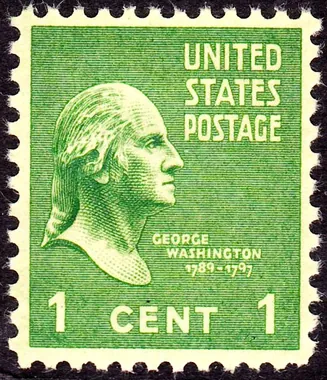
George Washington
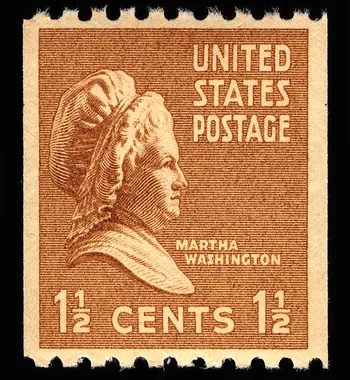
Martha Washington
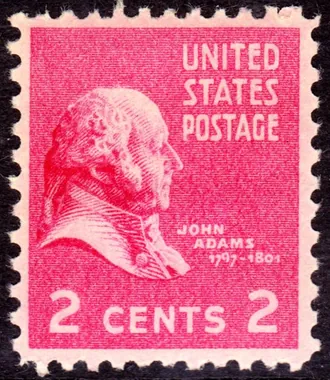
John Adams
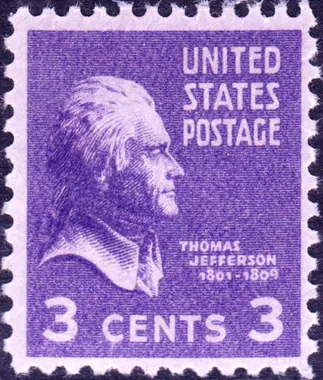
Thomas Jefferson
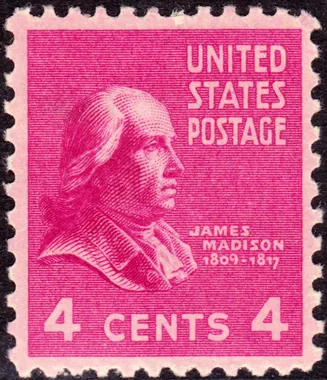
James Madison
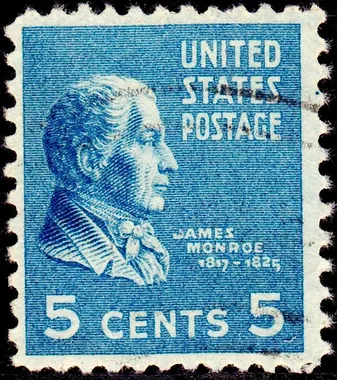
James Monroe
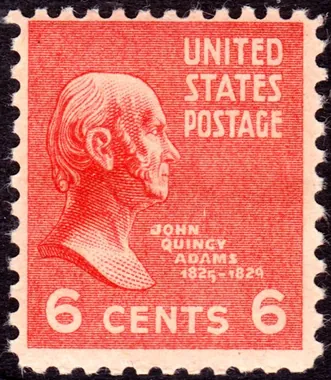
John Quincy Adams
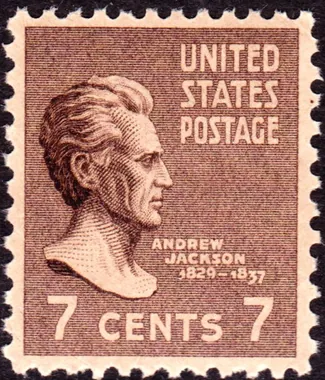
Andrew Jackson
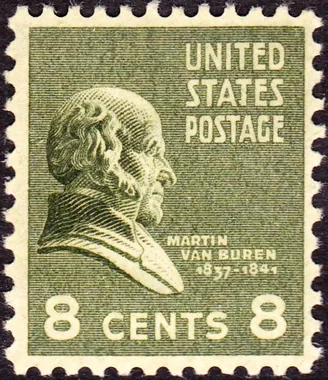
Martin Van Buren
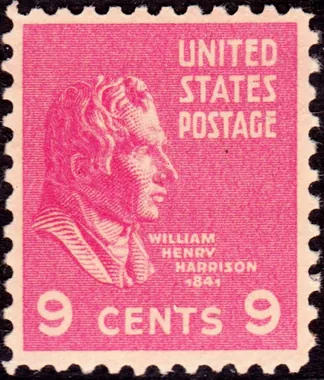
William Henry Harrison
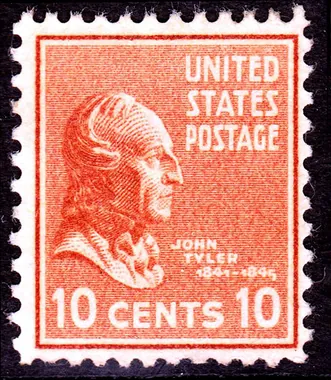
John Tyler
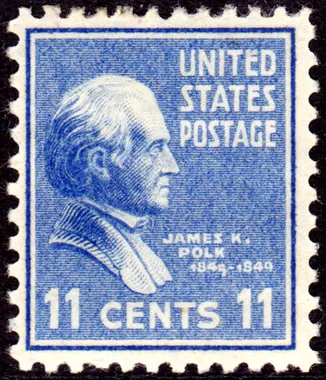
James K. Polk
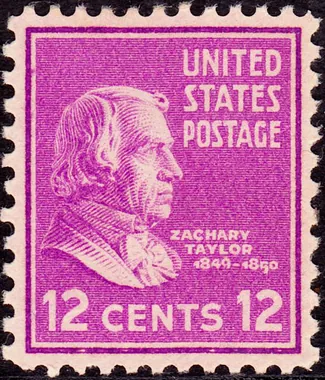
Zachary Taylor
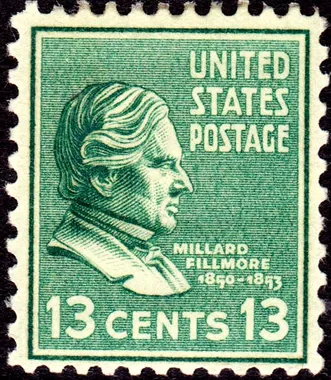
Millard Fillmore
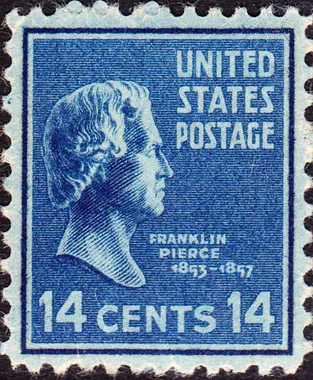
Franklin Pierce
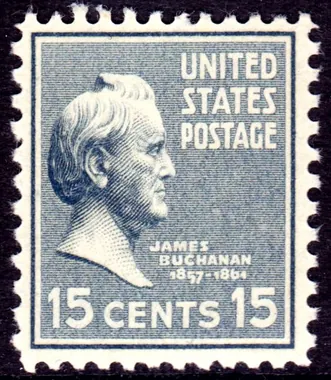
James Buchanan
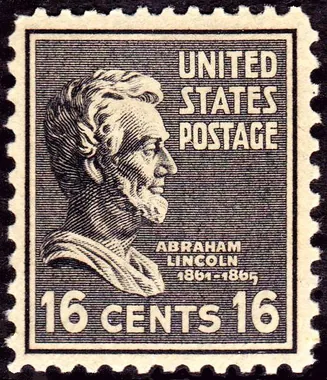
Abraham Lincoln
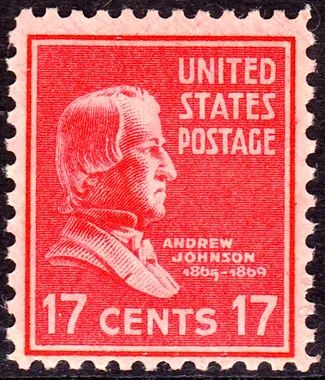
Andrew Johnson
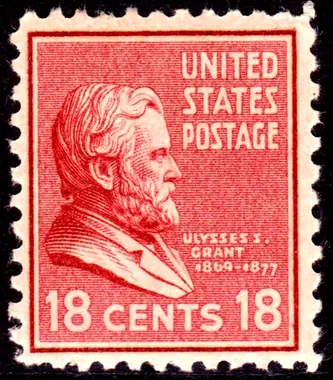
Ulysses S. Grant
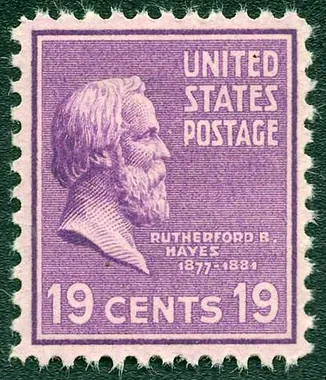
Rutherford B. Hayes
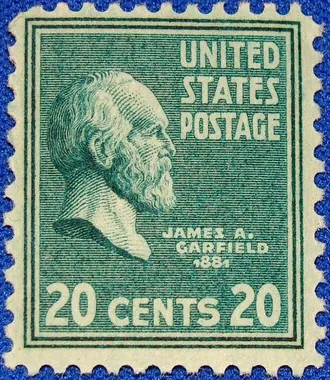
James A. Garfield
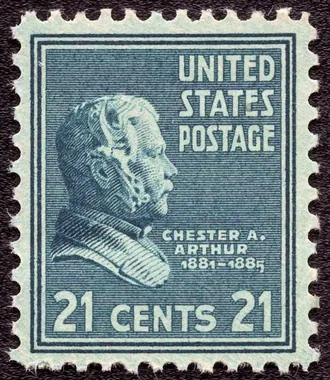
Chester A. Arthur
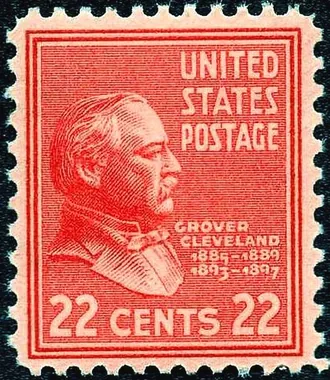
Grover Cleveland
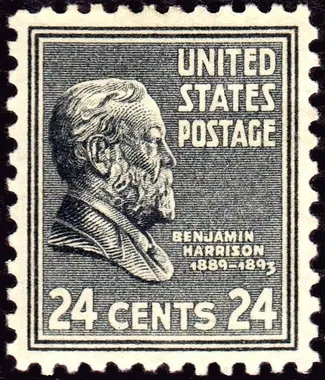
Benjamin Harrison
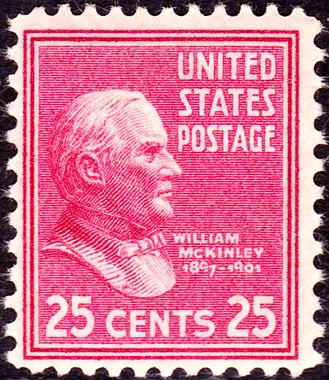
William McKinley
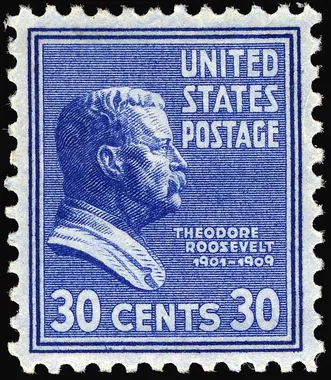
Theodore Roosevelt
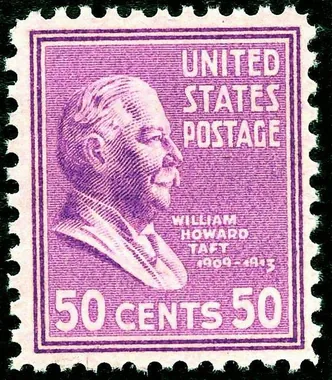
William Howard Taft
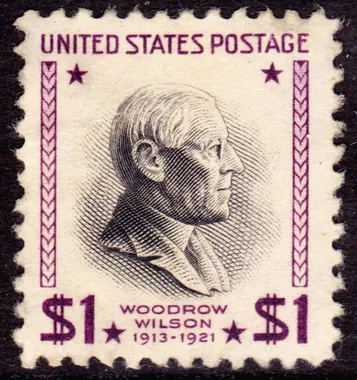
Woodrow Wilson
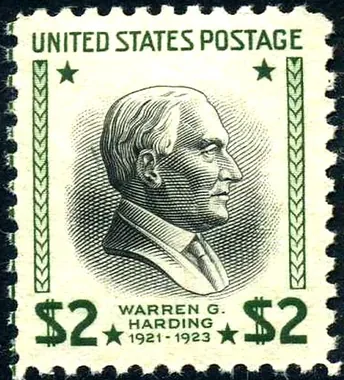
Warren G. Harding
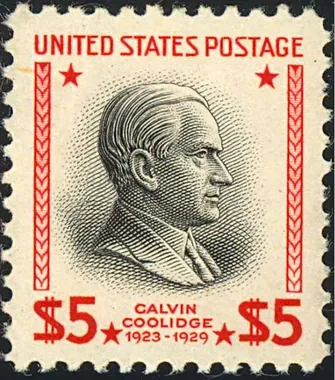
Calvin Coolidge
Images: Bureau of Engraving and Printing / U.S. Post Office, public domain, via Wikimedia Commons. Two values are not yet illustrated here — the ½¢ Franklin and the 4½¢ White House.
Sheet, coil or booklet — look at the edges
This is where Prexie value actually lives, and the design gives you no help at all: the picture is identical across all three formats. The edges are what separate them.
- Sheet stamps are perforated on all four sides. These are the ordinary ones, and the vast majority of what you will find in a shoebox or on old correspondence.
- Coil stamps came in rolls for vending machines and were perforated on two opposite sides only, with the other two edges cut smooth and straight. A Prexie with two perforated edges and two clean straight edges is a coil, and coils are consistently scarcer.
- Booklet stamps were trimmed from small panes and carry one or more straight edges where the pane was cut, usually with the other edges perforated normally.
Before you assume damage: a straight edge on a Prexie is not necessarily a trimmed or damaged stamp. On coils and booklet stamps it is how the stamp was made, and trimming a sheet stamp to fake one is a known practice — which is why perforation measurement matters more than eyeballing. See our guide to measuring perforations.
Printing method and paper
The Prexies were produced by the Bureau of Engraving and Printing during a period when both flat plate and rotary press methods were in use across US production. Rotary press printing stretches the design slightly as the curved plate rolls, so stamps from the two methods differ marginally in dimensions even where the design is the same. For US issues generally this distinction can separate a common stamp from a scarce one, and it is measured with a millimetre rule rather than judged by eye — the US identification guide covers the method in detail.
Prexies are printed on unwatermarked paper. If you are holding a US definitive that shows a watermark when examined properly, it is an earlier Bureau issue, not a Prexie. Our watermark guide explains how to check without damaging the stamp.
What actually drives Prexie value
Set expectations honestly: the Presidential Series was printed in enormous quantities and used for more than a decade. An ordinary used 1¢, 2¢ or 3¢ Prexie is worth very little, and no amount of age changes that. Four things move the number.
- Format. Coils and booklet stamps are scarcer than sheet stamps of the same denomination, and they are the most commonly overlooked value in a shoebox.
- Condition and centring. A well-centred example with even margins can be worth several times a poorly centred one of the same stamp. On unused stamps, original undisturbed gum matters as much as the front.
- Used versus unused. Heavy cancellations reduce value; light, clean cancels are preferred. Unused examples of the low values are common, so condition does most of the work.
- Denomination. The dollar values saw far less postal use and survive in smaller numbers, particularly in collectible condition.
For a realistic range on a specific stamp, condition has to be assessed before any figure means anything — our stamp value checker guide walks through grading before pricing.
Three mistakes people make with Prexies
- Reading the term dates as the issue year. The years under the portrait are the president’s time in office. Every Prexie is a 1938-or-later stamp.
- Confusing them with later presidential issues. The US has pictured presidents on several later sets. Some of those designs carry a large number that is the president’s ordinal, not the face value — if the stamp says “30th President of the United States” around the portrait, that 30 is not thirty cents. Prexies never use that wording.
- Assuming a straight edge means damage. As above, it is often how the stamp was manufactured, and it can mean the stamp is worth more, not less.
Quick reference: the Presidential Series
| Face value | Subject | Term of office |
|---|---|---|
| 1¢ | George Washington | 1789–1797 |
| 1½¢ | Martha Washington | — |
| 2¢ | John Adams | 1797–1801 |
| 3¢ | Thomas Jefferson | 1801–1809 |
| 4¢ | James Madison | 1809–1817 |
| 5¢ | James Monroe | 1817–1825 |
| 6¢ | John Quincy Adams | 1825–1829 |
| 7¢ | Andrew Jackson | 1829–1837 |
| 8¢ | Martin Van Buren | 1837–1841 |
| 9¢ | William Henry Harrison | 1841 |
| 10¢ | John Tyler | 1841–1845 |
| 11¢ | James K. Polk | 1845–1849 |
| 12¢ | Zachary Taylor | 1849–1850 |
| 13¢ | Millard Fillmore | 1850–1853 |
| 14¢ | Franklin Pierce | 1853–1857 |
| 15¢ | James Buchanan | 1857–1861 |
| 16¢ | Abraham Lincoln | 1861–1865 |
| 17¢ | Andrew Johnson | 1865–1869 |
| 18¢ | Ulysses S. Grant | 1869–1877 |
| 19¢ | Rutherford B. Hayes | 1877–1881 |
| 20¢ | James A. Garfield | 1881 |
| 21¢ | Chester A. Arthur | 1881–1885 |
| 22¢ | Grover Cleveland | 1885–1889, 1893–1897 |
| 24¢ | Benjamin Harrison | 1889–1893 |
| 25¢ | William McKinley | 1897–1901 |
| 30¢ | Theodore Roosevelt | 1901–1909 |
| 50¢ | William Howard Taft | 1909–1913 |
| $1 | Woodrow Wilson | 1913–1921 |
| $2 | Warren G. Harding | 1921–1923 |
| $5 | Calvin Coolidge | 1923–1929 |
Frequently asked questions
What is a Prexie stamp?
“Prexie” is the collector nickname for the US Presidential Series of 1938 (Scott #803–834), a definitive set of 32 values running from the ½¢ Franklin to the $5 Coolidge. It pictures every president from Washington through Coolidge, plus Benjamin Franklin, Martha Washington and the White House.
How do I tell which Prexie I have?
Read the denomination in the lower corners and the surname on the banner beneath the portrait. For the 1¢ through 22¢ values the denomination also matches the president’s number in office, so a 16¢ stamp is Lincoln, the sixteenth president. The years beneath the portrait are the president’s term, not the year the stamp was issued.
Are 1938 Presidential Series stamps valuable?
Most are not. The set was printed in enormous quantities and used for years, so ordinary used examples of the low values are worth very little. Value concentrates in the dollar denominations, in well-centred unused examples with original gum, and in the coil and booklet varieties, which are scarcer than the sheet stamps that look almost identical.
What is the difference between a sheet stamp, a coil and a booklet Prexie?
Look at the edges rather than the design. A sheet stamp is perforated on all four sides. A coil is perforated on two opposite sides only and cut straight on the other two. A booklet stamp has one or more straight edges where it was trimmed from the pane. The picture is the same in each case, so the edges are the only reliable way to tell them apart.
Why do some US president stamps show a number that is not the price?
Later commemorative issues also picture presidents with a large number on the design, and on some of those the number is the president’s ordinal rather than the face value. If the stamp carries wording such as “30th President of the United States” in an arc around the portrait, the number is the ordinal and the true denomination is printed elsewhere. Prexies do not use that wording.
Which Prexie values are hardest to find?
The three dollar values — the $1 Wilson, $2 Harding and $5 Coolidge — saw far less postal use than the cent values and survive in smaller numbers, particularly unused and well centred. Among the cent values, sound examples of the higher denominations are less common in collectible condition than the everyday 1¢ to 3¢ stamps.
Sources
- Bureau of Engraving and Printing / U.S. Post Office — stamp images, public domain, via Wikimedia Commons
- Scott Specialized Catalogue of United States Stamps — series range Scott #803–834