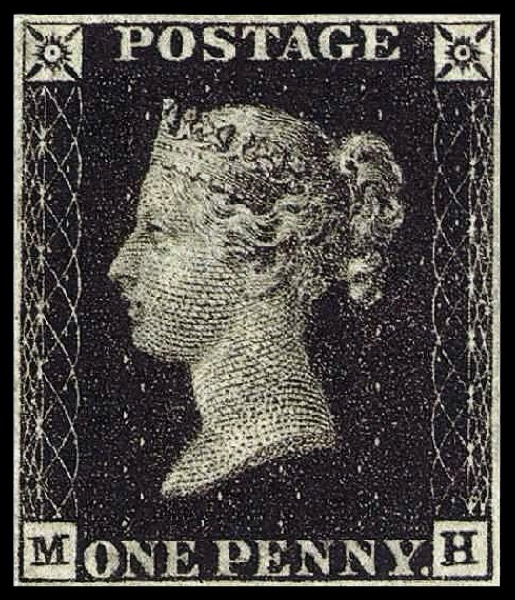
The Penny Black is the world's first adhesive postage stamp, issued in Great Britain on 6 May 1840. It featured a portrait of the young Queen Victoria and launched the modern prepaid postal system that the entire world copied.
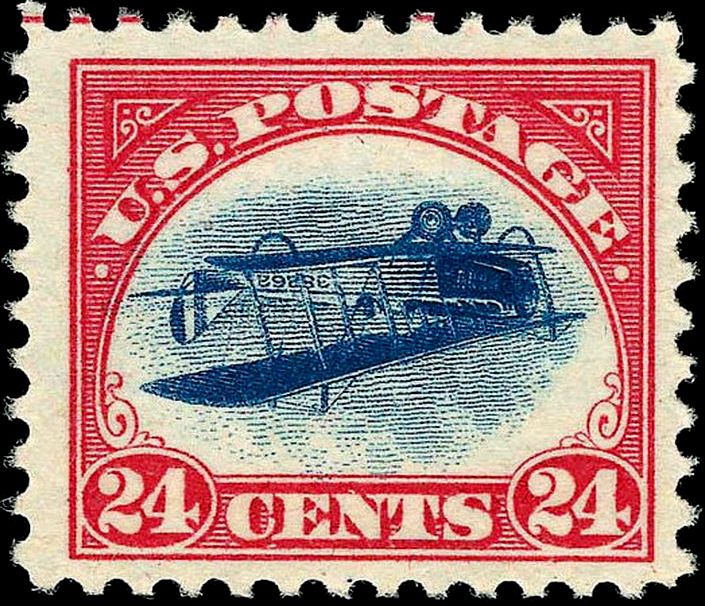
The Inverted Jenny is a 1918 United States 24-cent airmail stamp on which the blue Curtiss JN-4 "Jenny" biplane was accidentally printed upside down. Only one pane of 100 error stamps ever reached the public, making it one of the most valuable and famous stamps in the world.
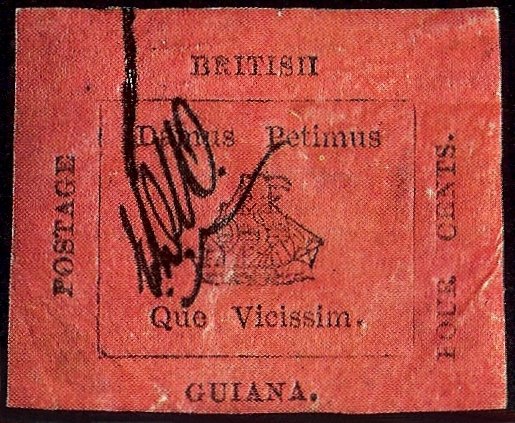
The British Guiana 1c Magenta is the world's most famous and most valuable single stamp, and only one example is known to exist. Printed locally in 1856 as a crude emergency issue, this lone survivor last changed hands for roughly US$9.48 million in 2014.
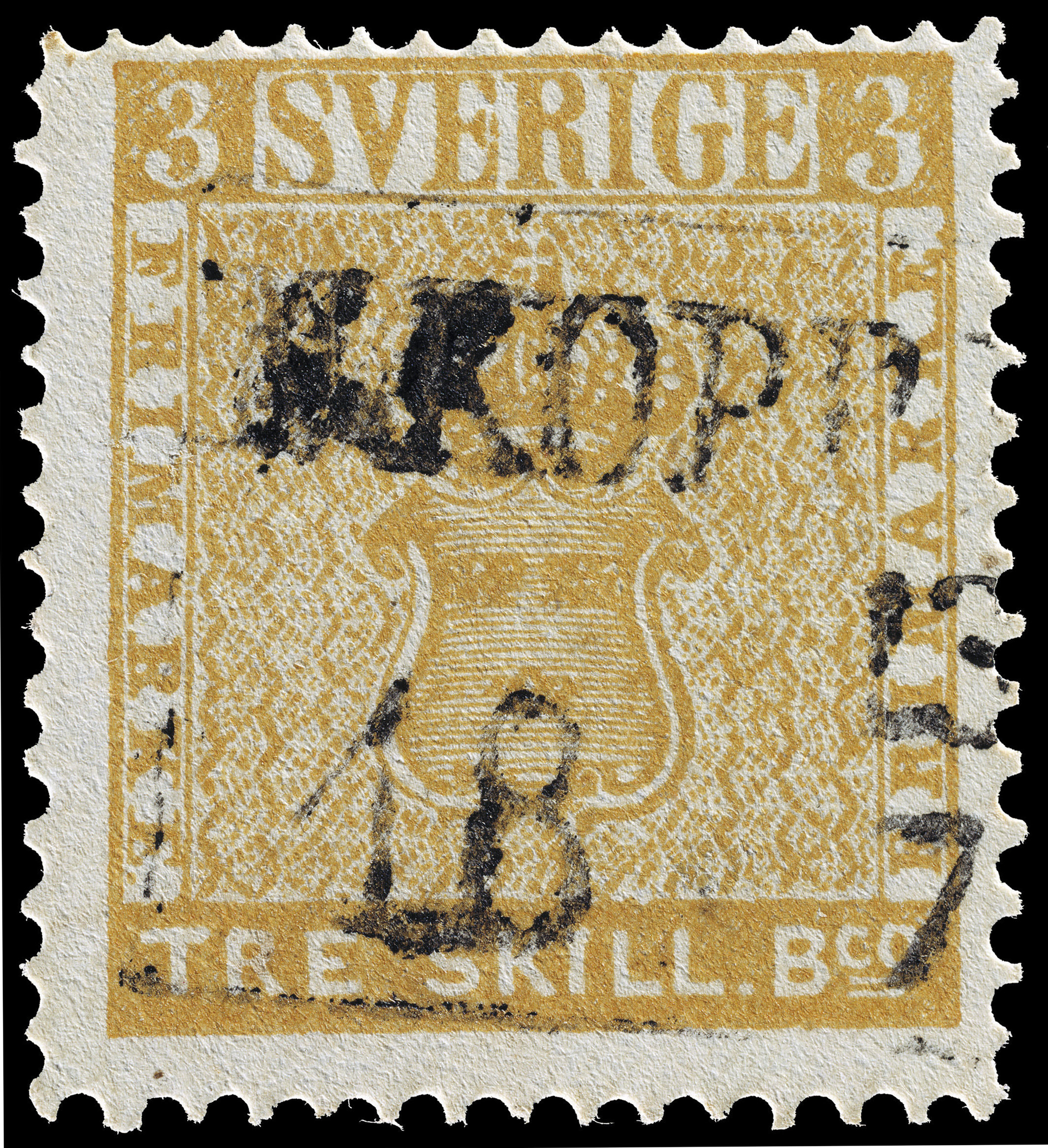
The Treskilling Yellow is a unique 1855 Swedish 3 skilling banco stamp that was mistakenly printed in yellow-orange instead of its correct blue-green colour, making it one of the most valuable stamps ever sold.
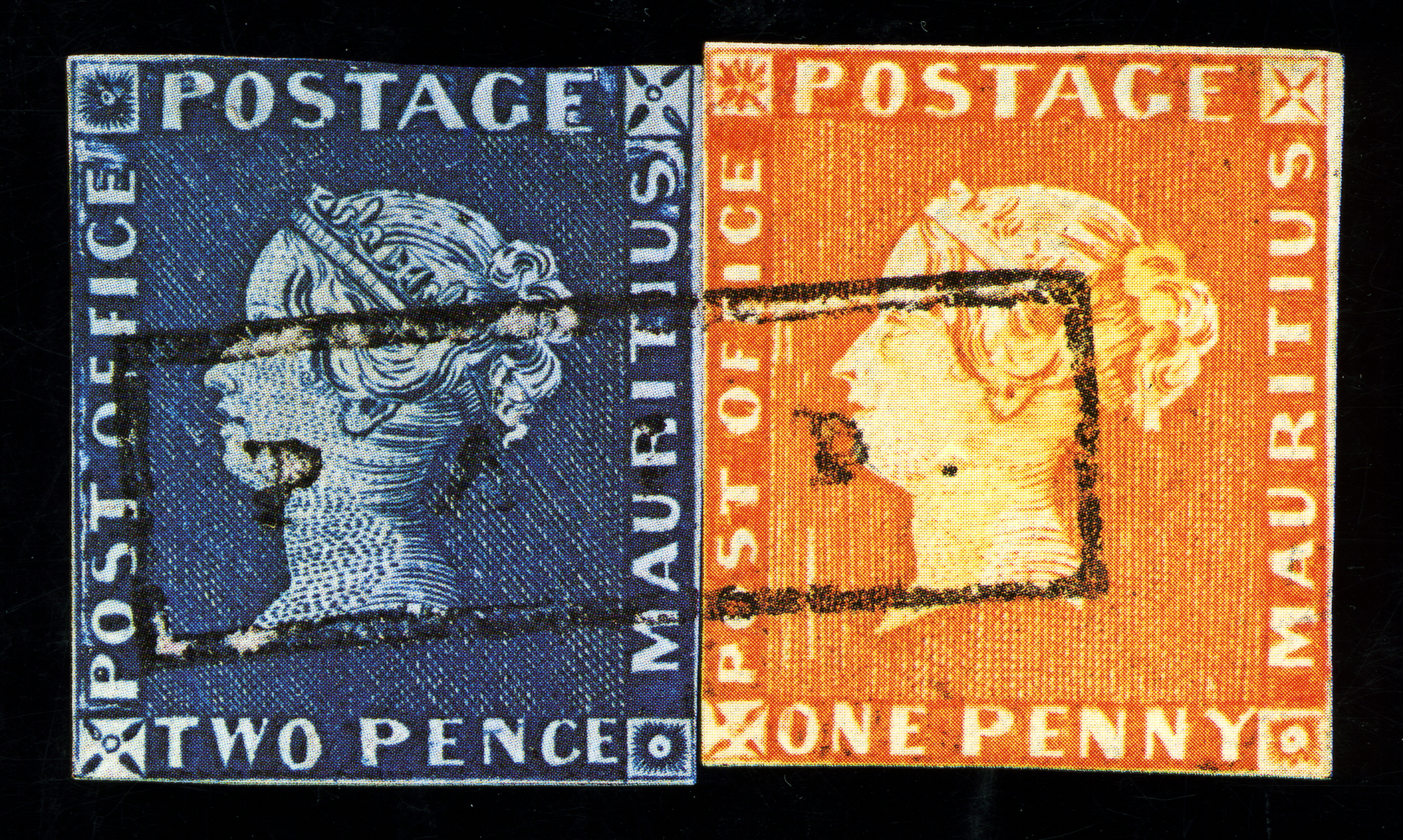
The Mauritius "Post Office" stamps are an 1847 pair, the 1d orange-red and 2d deep blue, that rank among the most valuable stamps in the world. They were among the first postage stamps issued anywhere in the British Empire outside Great Britain, and only about 27 examples survive across both values. Their fame comes from a single detail: the early printing reads "POST OFFICE" along the left margin instead of the "POST PAID" used on later issues.
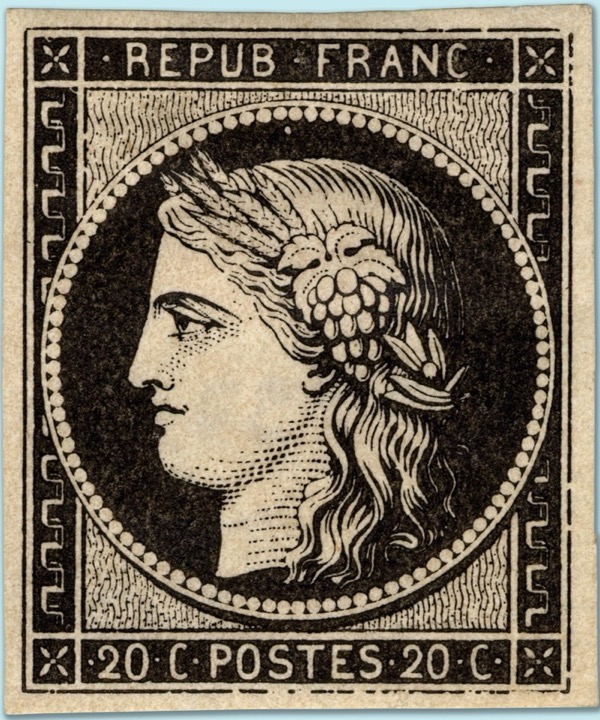
The Ceres issue of 1849 was France's very first postage stamp. Designed and engraved by Jacques-Jean Barre, it shows the profile of Ceres, the Roman goddess of agriculture and the harvest. The stamps are imperforate and line-engraved, and the rare 1 franc vermilion is among the most prized stamps in French philately.
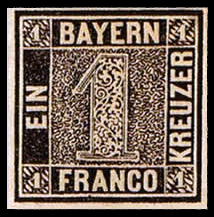
The Bavaria 1 Kreuzer black, nicknamed the Schwarzer Einser (Black One), was issued on 1 November 1849 and was the first postage stamp of Bavaria and of any German state. It is printed in black with a large numeral 1 at the center and is imperforate.
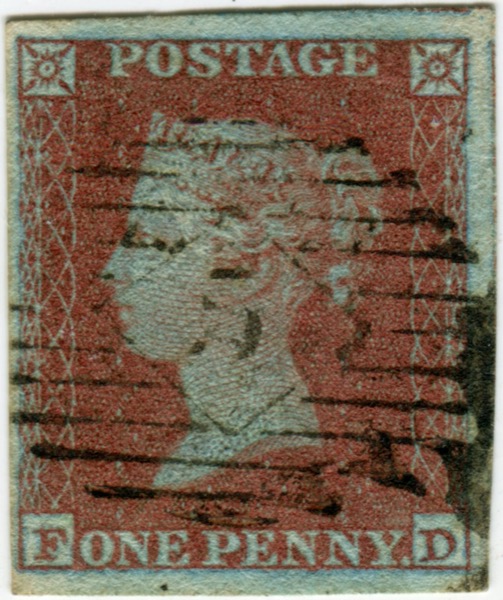
The Penny Red is the red-brown British one-penny stamp that replaced the Penny Black in 1841. It uses the same Queen Victoria portrait but was printed in red-brown so black cancellations would show up clearly and could not be cleaned off for reuse. It is one of the most common antique stamps in the world, so most examples are inexpensive — but certain plates and varieties, above all the legendary Plate 77, are extremely valuable.
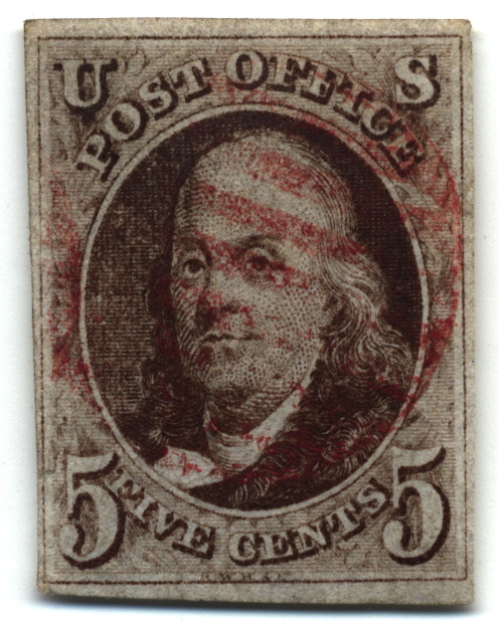
The 1847 5¢ red-brown Benjamin Franklin (Scott 1) and the 10¢ black George Washington (Scott 2) were the first general-issue postage stamps of the United States. They were engraved and imperforate, printed by Rawdon, Wright, Hatch & Edson of New York, and released on July 1, 1847.
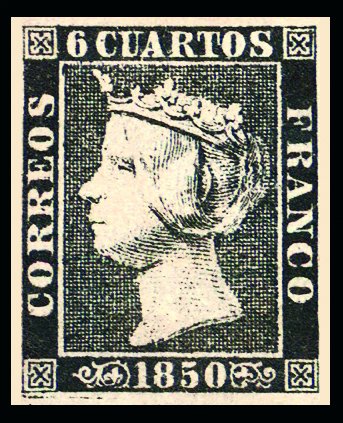
Spain's first postage stamp was the 6 cuartos black, issued on 1 January 1850 and bearing a left-facing profile of Queen Isabella II. It is lithographed, imperforate, and printed without a watermark.
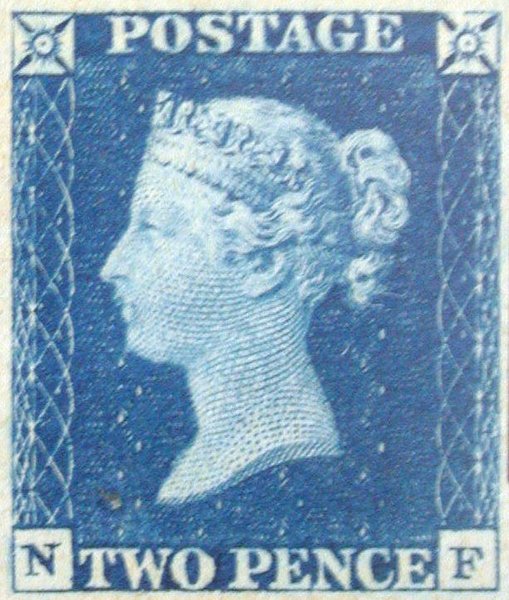
The Two Penny Blue is the world's second postage stamp, issued in Great Britain in May 1840 alongside the famous Penny Black. It shares the same Queen Victoria design but was printed in blue, paid the two-penny rate for heavier letters, and is considerably scarcer than its black sibling.
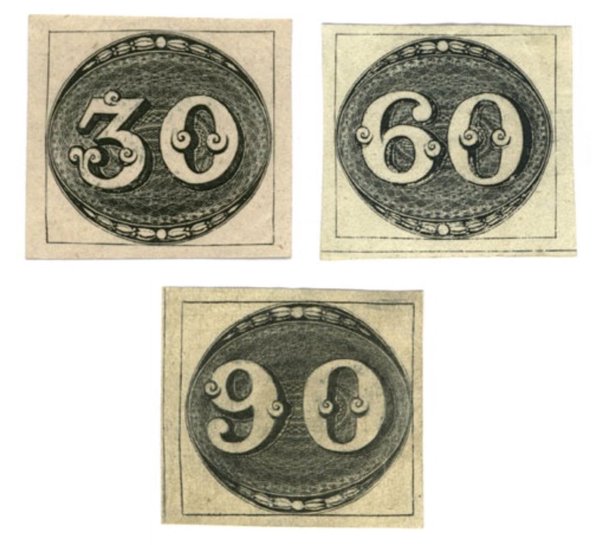
The Bull's Eye (Olho-de-boi) is the first postage stamp of the Americas, issued by the Empire of Brazil on 1 August 1843. Its large numerals in ornate black ovals made Brazil the second country in the world, after Great Britain, to introduce national adhesive stamps.
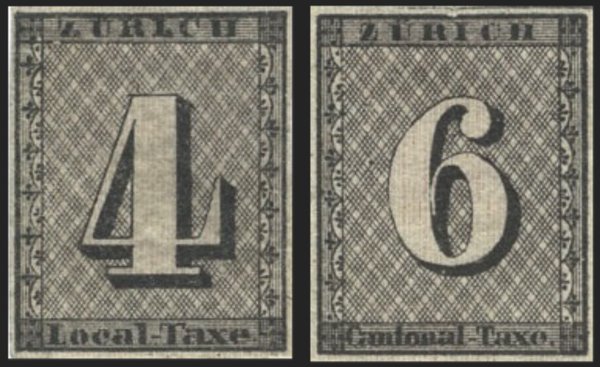
The Zurich 4 and 6 rappen, issued by the Swiss Canton of Zurich on 1 March 1843, were the first postage stamps of continental Europe. Only Great Britain preceded them, which makes these modest black numerals two of the most coveted classics in philately.
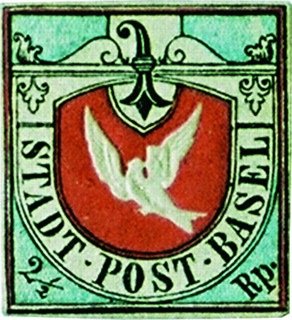
The Basel Dove (Basler Taube) is the only stamp ever issued by the Swiss canton of Basel, released on 1 July 1845. Printed in black, crimson and blue with an embossed white dove, it was the world's first tricolour stamp and remains one of the most admired classics in philately.
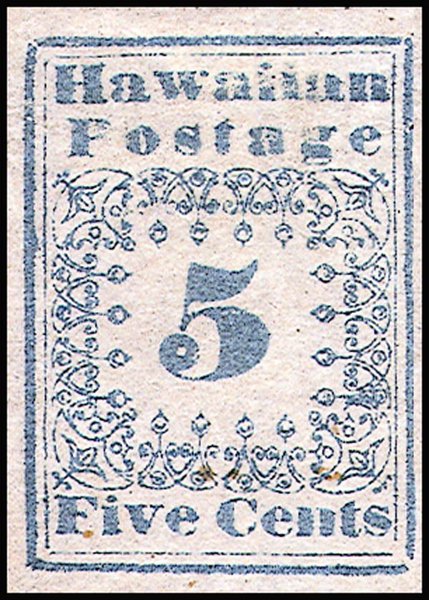
The Hawaiian Missionaries are the first postage stamps of the Kingdom of Hawaii, placed on sale on 1 October 1851 and printed on extremely fragile pelure paper in Honolulu. With only about 200 examples known to survive, they rank among the rarest and most storied stamps in the world.
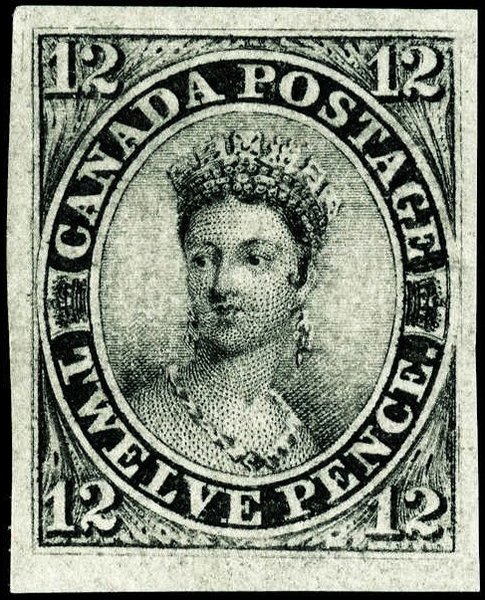
The Twelve Penny Black, nicknamed the "Black Empress of Canada", is the great rarity of Canadian philately: an imperforate black stamp of the Province of Canada issued on 14 June 1851 showing Queen Victoria after Alfred Edward Chalon's portrait. Of 51,000 printed, only 1,450 were ever sold, and roughly 130 examples are believed to survive.
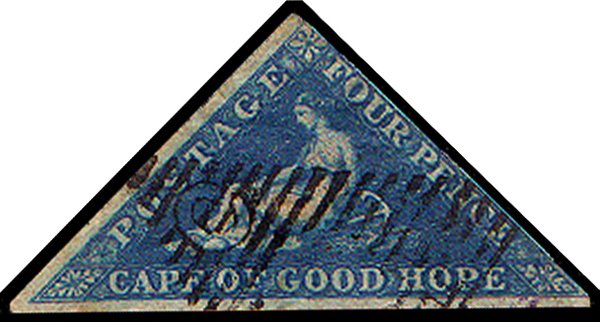
The Cape of Good Hope Triangular, issued on 1 September 1853, was the world's first triangular postage stamp and the first stamp of the British Cape Colony in southern Africa. Its three-cornered shape and seated figure of Hope made it one of the most recognisable classics in philately.
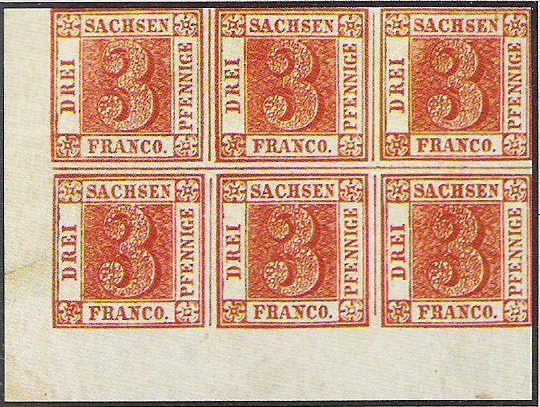
The Saxony 3 Pfennige red, known to collectors as the Sachsendreier, was the Kingdom of Saxony's first postage stamp, issued on 1 July 1850. Although half a million were printed, most perished on discarded newspaper wrappers, turning it into one of Germany's most celebrated classic rarities.
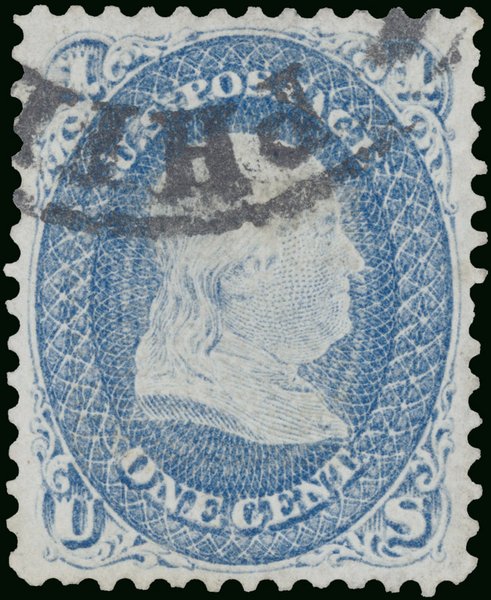
The 1-cent Benjamin Franklin Z Grill of 1868 is generally regarded as the rarest of all United States stamps, with only two examples known to exist. It is an ordinary-looking 1861-design 1c blue Franklin distinguished solely by a tiny embossed waffle pattern on the back — the so-called Z grill.
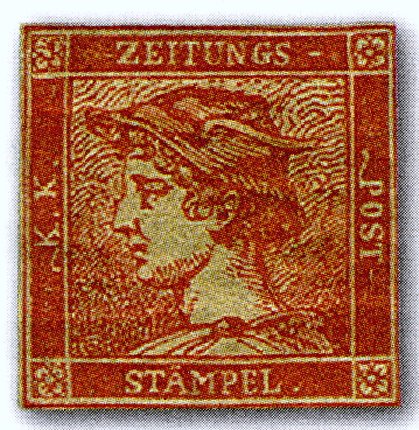
The Red Mercury (German: Rote Merkur or Zinnoberroter Merkur) is a vermilion Austrian newspaper stamp issued in 1856 to prepay bundles of ten newspapers. Because it was stuck to wrappers that were torn off and discarded, only a small number survive, making it one of the great rarities of classic European philately.